
Small Business Month · October 2026 · Free · Online
Making source separation easy.
Get ahead of the legislation and secure your spot for our webinar.
Sign up now ↓Why now
Food waste is a huge contributor to emissions. The Australian hospitality sector generates about 16% of the nation's total food waste (roughly 1.2 million tonnes annually), producing millions of tonnes of carbon dioxide equivalent emissions.
In July 2026, separation and collection of food waste became mandatory for larger restaurants, bars and pubs producing 3,960 L or more a week (six 660 L bins). From 2028 smaller venues will also need to have their food waste separated and collected.
What most small businesses don't know is that switching to organics collection can save your business money, as well as being better for the environment. It's what we call a win-win.
16%
of Australia's food waste comes from hospitality
July 2026
separation mandatory for venues over 3,960 L a week (6 × 660 L bins)
2028
smaller venues follow
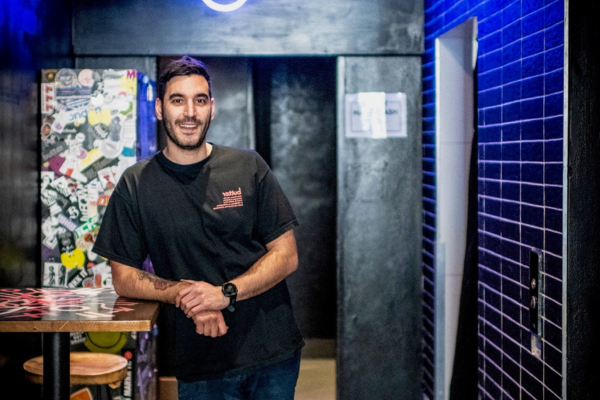
Your host
Julian Cincotta
Working chef and business owner, Butter and Hollywood Quarter
This practical session is run by working chef and business owner Julian Cincotta. He'll take you through how to set your business up for success and make this important change.
Get ahead of the legislation and make the switch with confidence.
This free webinar is proudly funded by the NSW Environment Protection Authority (EPA), who are supporting Julian and the HQ team to reach as many independent food businesses as possible.
Free · One hour · Online
Secure your spot
One hour, online, free. Both sessions are recorded, so sign up even if your plans might change.
You're booked.
We've saved your spot. Your joining details are below and on their way to your inbox with a calendar invite. The session is recorded if things change.
This free event by HQ Sydney and HospoDECLARE is part of NSW Small Business Month, 1–31 October 2026.

Proudly funded by:

This content is proudly funded by the NSW Environment Protection Authority (EPA).
This project is an initiative of the NSW Environment Protection Authority under the NSW Government's Waste and Sustainable Materials Strategy, and is funded from the waste levy.